How to write a bad book review

DIYYep, that title was carefully phrased to have dual meanings. I’ve been a book reviewer and an author. Sometimes, as a book reviewer, I just didn’t like a book. That’s tough. Sometimes, as an author, readers don’t like what I have written, and that is tougher, because a one star review can cause book sales to plummet. Well, unless the reviewer is an obvious nut-case, and in that instance…it still hurts.

First, let’s deal with how to review a book that isn’t just want the reviewer/reader wanted. If writing for a site or magazine, the best thing is for the reviewer to just pass on it. Let’s face it, not everyone likes every book. Really. I’ve read classics and wondered, how the heck did this book even get published, much less remain after its fellows all ended up in the landfill? So, it really is best to pass it to another reviewer who might be more amenable to the book. But, if it is absolutely necessary to review it, begin with what isn’t wrong with it. Surely there is something— good prose, interesting setting, an absence of poor spelling and/or grammar. Find something good. Then, state the objection(s) clearly, and then explain the obvious— that others might not agree. If five stars are available, then rate accordingly, and there really should be more than one star clicked. Because whatever the reviewer found that was good probably warrants a second or even a third star.

A really, really bad book is going to be rife with problems— spelling, grammar, formatting; or lackluster characters, a plot that moves more slowly than molasses on a cold winter’s day; or even inconsistencies (such as a character with blue eyes in chapter 1 and brown ones in chapter 8). In such cases there is no need for the reviewer to get emotional and resort to “I”, “me”, or “my” because the author burdens the work with too much evidence that the book is indeed bad. There, and only there, might those one and two star reviews be warranted.

If the book is an eBook, and the reader purchased it from Amazon, there is a return feature. Did you know that? I didn’t, until recently. Anyway, the other day I returned a highly rated sci-fi novel. I did not write a bad review, because I wasn’t about to waste enough time to read it and then review it. Those who slog all the way through a Kindle title only to write a one star review must have intense masochistic tendencies.

Finally, I’ll deal with the second interpretation of my title. Sometimes readers do write really bad reviews. Readers (hopefully not reviewers) who write bad reviews seem to have a tantrum while sitting at the keyboard. The most prominent word in the review is probably a first person pronoun, such as “I” or “my” or “me” because such reviews are not written for other readers, but to express the emotions of the reviewer. In short, bad reviews begin with a lack of objectivity. Then the bad reviewer indulges in emotion, from boredom to revulsion, but the writer of the bad review seldom mentions any positive(s) in the book. Finally, writers of bad reviews usually need a reason for the hissy fit, so the review ends with a warning, guised as altruism to save potential buyers from a book that took months (or even years) to write and costs less than a Quarter Pounder with cheese.

Do it yourself book reviews are just as much a part of modern life as kids who commit suicide because they can’t handle what their mean peers write about them online. Authors just have to be tough.
A Galaxy Unknown— the sequels

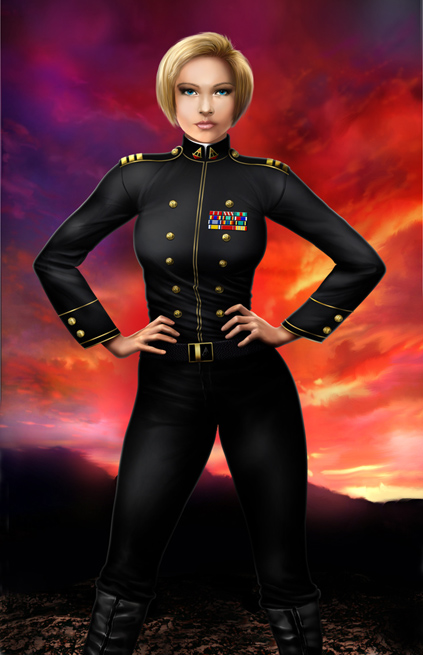
Jenetta Carver image

This is an update as well as a review. A while back, I read Thomas DePrima’s A Galaxy Unknown, and despite some serious flaws, I was so taken with the main character and the “universe” of its setting that I immediately began reading the sequels. Somewhere around book five, I had had enough. The main character seemed way too perfect and the rest of the characters were just there to heap praise upon her. So, I read lots of other stuff, but after running out of new stuff, one night I began re-reading the series. And, when reading them back to back, they seemed a bit better. Or maybe, I got used to the annoying stuff. Anyway, having caught up with where I left off, I just downloaded book 7, so I am clearly enjoying the series.

Space opera, especially the theme sometimes called “galactic empires” is a favorite of mine. Lots of indie authors give this genre a try, so I seldom run out of reading material. However, some of it isn’t particularly entertaining. Jenetta Carver’s exploits clearly owe something to another favorite character (Honor Harrington) but while David Weber’s works have become ever so much complex, DePrima’s stories have not. So, these novels are certainly light reading, but for me that is a plus. If I want to think, think, think when I read, I can always pick up one of hubby’s law books.

If you like space opera with a dash of romance, do try Trinity on Tylos, my stand alone novel. (Right now, it is cheap, too!) But, if you want a series, with very little romance, but a strong heroine, DePrima’s A Galaxy Unknown (and its many sequels) is pretty good.

Lacuna— a review

Lacuna cover

I got Lacuna, by David Adams, as a Kindle freebie. Not because I write review, but because that’s the price. Really.

And, it is a space opera, which is among my favorite genres.

The description (blurb) from Amazon begins thusly:

“Never again attempt to develop this kind of technology.”

It is with these words that an unknown alien attacker destroys the Earth cities of Tehran, Sydney and Beijing. Fifty million people die… and nothing is ever the same again.

That’s a cool blurb, and the beginning of the book is riveting. Unfortunately, it goes downhill from there. (spoilers ahead) Many of the Amazon reviewers mention that the plot, especially the main character’s actions, are just not aligned with military protocols. Too true. Worse, the alien fighter pilot (a really cool character) is also not quite believable, either.

Honestly, there is much to like about this book, including plenty of action, a heroine who is dynamic and not American, and a reasonably good job of editing.  However, for readers who insist that plots and character development not require vast suspension of disbelief, then this book is not gonna work.

I’m tempted to buy book 2 in the series, which is no doubt why Adams is giving away book 1. But, if it is as out of touch with reality as the first one, I will probably be mad at myself.

Trinity on Tylos, Mulberry River Publishing edition

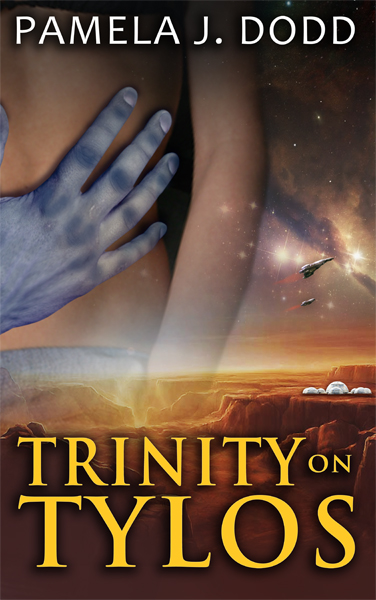
ToT_cover_final_webLGAfter six years with the original publisher, Trinity on Tylos is going to be available in a new edition, via Amazon’s Kindle store.  I’ve priced it at $2.99, the same price as my debut novel, The Gift Horse. For this new version, I went through a copy of the eBook and made every effort to eliminate some of the errors in the original. However, there are no substantial changes, as I was fairly content with it, apart from the proofreading, which was a problem with the original publisher.

The new cover was designed by Dawn Seewer, who did the cover for The Gift Horse. The background depicts the landscape of Tylos IV, with the ships in the sky. The models in the foreground are Venice and Azareel, and I think the artist did a good job. A few of the readers of the original printed novel told me that the cover didn’t really convey the serious nature of the novel, so I hope that this new cover touches the bases.

For those who haven’t read it, here is the original synopsis that I used when shopping the manuscript:

What sacrifices must an officer make to save her shipmates from certain doom? Venice Dylenski, the young security chief of the colonizing ship, Excalibur, is faced with this dilemma after her captain makes a critical error in judgement in an encounter with an alien with superior fire power and a hidden agenda.

Trinity on Tylos begins as Venice experiences an embarrassing moment on a survey mission, one which rules out yet another planet as a hospitable home for their colony. While continuing its search, the Excalibur encounters the Archeons, an alien race characterized by gray-blue skin and a facility for language. The interchange results in Venice and a crewmate, Alathea Duke, being taken captive by the mysterious Archeon captain, Azareel. In short order, he informs them that they will play a critical role in revitalizing his dying race, that of surrogate mothers to genetically engineered Archeon offspring.

Venice, reluctant “to be the next Archeon soccer mom,” strives to escape, but her companion seems all too willing to cooperate with their captor. Thus the stage is set for multiple conflicts between human and Archeon, human and human, and humanoids verses the hostile environment of their new planetary home in the Tylos star system.

Trinity on Tylos has the elements of a good space opera: complex characters faced with myriad problems to solve, set in a future where man may have escaped the bounds of his solar system, but not the bonds of human emotions.

Poor Man’s Fight— a review

While there are any number of space operas available via eBook, I enjoyed Poor Man’s Fight by Elliot Kay quite a bit. The formula is perhaps too much tried and true—yet another coming of age in the military story, but I thought the premise that sets the hero upon his path more thoughtful than many others. Our protagonist, Tanner Malone, is a good student and a nice guy; he’s about to graduate from secondary school. But, in this futuristic yarn, those who perform in a less than exemplary manner on a gi-normous one day test are going to owe a private corporation for their education. Tanner, upset by his dad’s bombshell that he and stepmom are moving off planet leaving him to be “on his own,” doesn’t do particularly well on the test. Owing several grand, Tanner does what any red blooded male teen would do—he consults a girl. (I speak from experience, as the mother of a young adult male.) Anyway, this young lady suggests that he enlist, so that the military will provide him with a home and a job, and that will enable him to begin to pay off the massive debt of his education. In short order, without consulting dad or stepmom, Tanner enlists.

Some other reviewers mentioned that the book’s set up wasn’t plausible. In a day when student loan debt is at all time highs, I actually thought the scenario of a teen trying to deal with crushing debt was the most realistic part of the story!

However, once Tanner gets into basic training, the action keeps readers entertained. His training is related in some detail, but, eventually, he graduates. Having dispensed with roughly half the novel, the author has to create a military disaster pretty quickly, so the hero has a chance to be heroic. I know, that sounds sarcastic, but it isn’t meant to be. By and large, heros are ordinary folks placed in extraordinary circumstances, and that’s what we have here. There’s plenty of heroism during the last third of the book.

Honestly, Poor Man’s Fight cost me some sleep. I just couldn’t wait to see how Tanner’s intense military training saved him (and lots of others) from the incompetence of his fellow navy types, as they are facing some really dastardly villains. And, once the last big scene began to unfold, the suspense ramped up even higher. I was not disappointed. Not at all.

So, if you like space opera, coming of age stories, or just a suspense filled yarn, try Poor Man’s Fight. It’s a bargain!

Going, going, almost gone

TrinitycoversmThe Whiskey Creek Press version of Trinity on Tylos is about to become a bit of a collector’s item. When it was first published, I was mostly pleased, although the final edits were rushed and far too many mistakes made it into the print copy. The paperback was not of the best quality, either. The ebook, at least the one I got from the now defunct Fictionwise, was far worse. What few royalty reports I received indicated low sales, and even lower royalties. At one point, I was getting seventeen cents per ebook sale, and a typical quarterly check was about five bucks.

When the book came out, in 2006, I sought out speaking engagements, author-guest slots at science fiction conventions, and I did quite a bit of internet promotional activity, hoping to help Trinity find an audience, and to do my part to help sell the book for WCP. By 2007, I realized that the sales were not going be as good as my self-published debut novel, so I spent far less time promoting it. But, WCP continued to be a disappointment, too. Just to get Amazon to list it, WCP required that I purchase two copies at full price; then, initially, the title was misspelled on Amazon’s website. Eventually, the print book was listed correctly, and I did have a couple of very good reviews on Amazon, as well as several from other sources. When Amazon’s Kindle format began to take on increasing importance, WCP indicated that eventually all of their titles would be available for the Kindle. While Trinity on Tylos was available for the Nook, it was never converted to Kindle format. My original contract was for two years, but I did not ask for my rights back, in part because I hoped WCP would eventually pay me more royalties, and that they would support the book. And, to be honest, I was very busy with my adjunct instructor job, as well as being mom to teenagers, so I didn’t push either promotion or accountability from WCP.

After years and years of zero communications regarding sales, I can only conclude that either there were no sales or WCP kept all of the royalties. I will never know which. I’ve maintained a website, with promotional materials, links to vendors, and so forth, at my expense, and I finally came to the conclusion that WCP was never going to pay me anything ever again. Anyway, I did ask to have my rights back at the end of last year, via email, and there was no response. I asked again recently, via snail mail, and while I still have not heard a word from WCP, I noticed today that Trinity on Tylos is no longer listed for sale by Whiskey Creek Press nor by Barnes and Noble. Amazon still has it for sale, but they list the one lonely copy, and I do remember that I paid for it in 2006. I’ll bet it is quite shopworn by now!

Fellow WCP authors are in a bit of an uproar, because WCP has been sold to a New York firm, Start Media. Some of those other authors have suggested that I self-publish it, as they are doing with their own books, and I have talked with Booklocker about doing the formatting and cover. Since I don’t have a clean copy of the manuscript, I’ll be doing some editing before doing anything else.

In the meantime, Whiskey Creek Press is going, going, soon to be gone. Various interent sites have chronicled the demise of this small press, and much of the dirt is recorded here. For whatever reasons, I’m sad, which is illogical, because the publisher hasn’t been paying me or even bothering to respond to email. And there is little solace in knowing that I am not the only author that they deemed not worth a simple email.